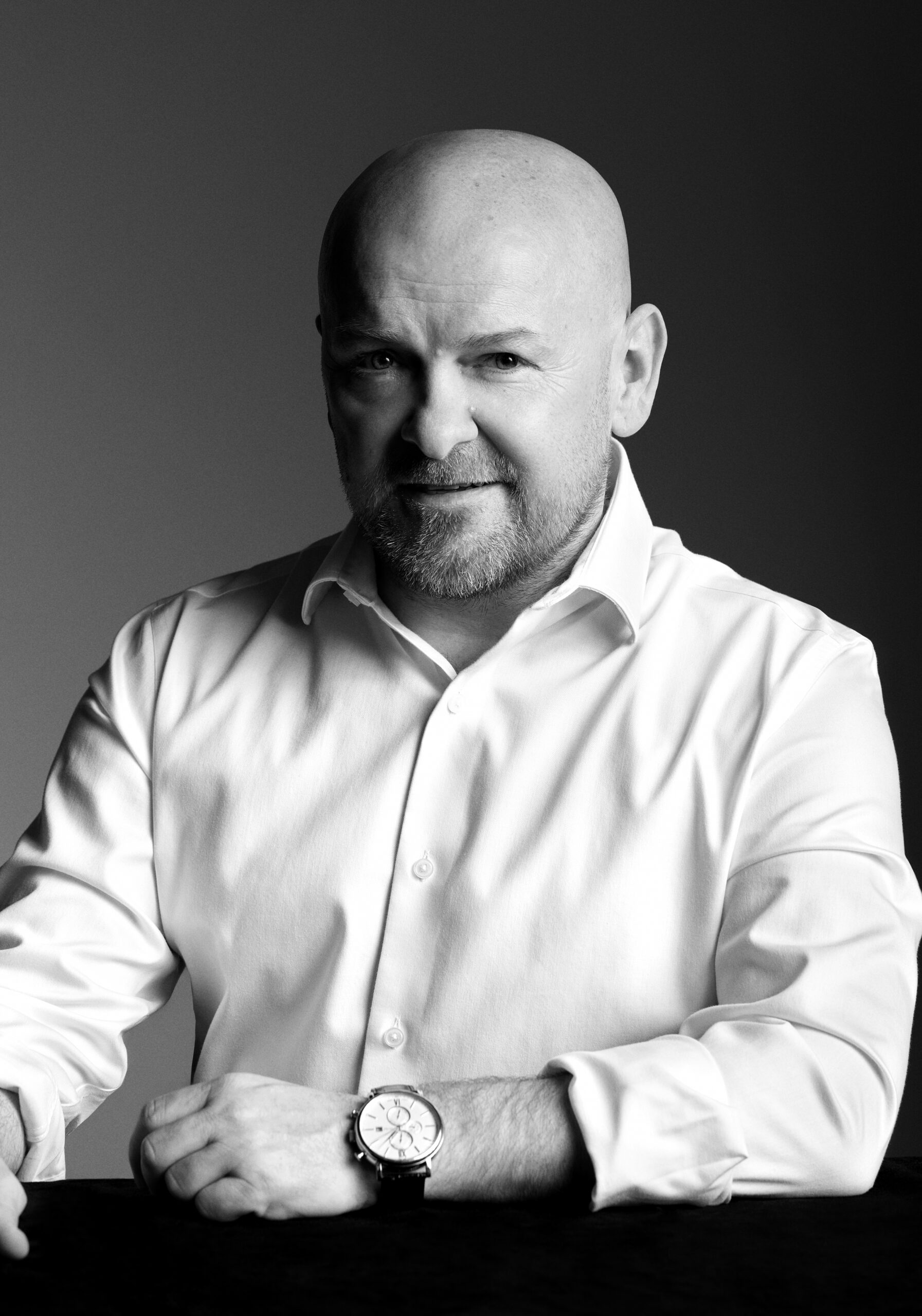
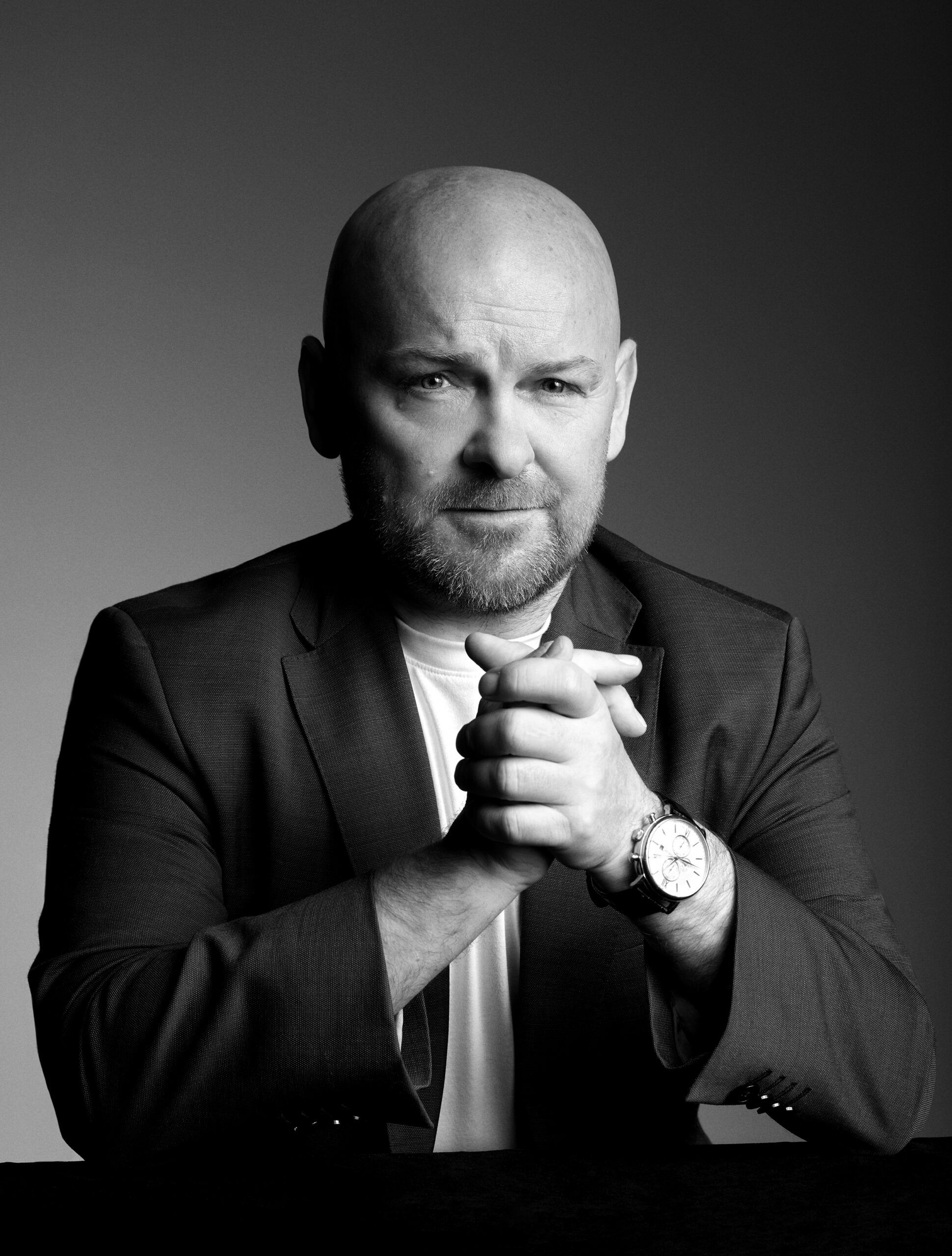
For fifteen years he has been building a brand in the Czech Republic that stands among the key players in the sanitary technology sector. Aleš Daniel, Managing Director of TECE, speaks about business without empty phrases — about functional technologies, sustainability without fanaticism, and why artificial intelligence should never replace human contact.
You now have fifteen years together behind you. How do you look back on that time?
It went by incredibly fast. When I reflect on how large a company we managed to build, it still strikes me as almost unbelievable. I see it as a major success. It was, of course, not a journey without complications. Over those fifteen years there were a number of important moments and challenges that forced us to rethink our original strategy. No market is static — everything evolves and changes constantly. We, too, had to adapt along the way and respond to how the market was developing.
And can you allow yourself to feel proud of your own role in that?
I can — though I am constantly searching for the line between healthy self-confidence and arrogance. It is perhaps partly a Czech trait. We do not tend to speak highly of ourselves in public, and for me personally it has never come naturally. Besides, it is never the work of a single person.
Fifteen years with one company is a long time. Were there moments when you felt tired or questioned whether you still had something to give?
Many times. And I think that is entirely natural. In my view, it is healthy to doubt yourself occasionally. It means you have your feet on the ground and you do not lose perspective. Today it is fashionable to talk about how content, balanced, and above it all we are. But a certain degree of discomfort and dissatisfaction is the engine that drives us forward. I am an ambitious person who constantly looks for room to improve.
If you were designing a bathroom for yourself today, what criteria would guide your choices?
In this regard I am a conservative person. I would want a bathroom that is timeless and will still function well in ten or fifteen years. I do not want to replace it simply because it has aged visually or technologically. I appreciate beautiful things, but they also have to be functional. I do not want to be a slave to technology — I want technology to serve me. It does not need to be a bathroom controlled by a mobile phone or full of effects. If technology genuinely delivers greater comfort or a higher hygiene standard, though, it absolutely has its place.
Sustainability has been a defining topic in recent years. Is it truly changing how customers and investors make decisions?
I think we are still at the beginning — and I do not mean that only in the Czech context. Sustainability is talked about a great deal today, but at the moment of actual decision-making it is rarely the primary factor. A telling example is airlines offering the option to pay a surcharge to offset emissions. I do not believe many people take that up voluntarily. Sustainability is an important topic for us, but at the same time we are not willing to significantly alter our comfort for its sake, or to pay substantially more for it.
Business is going through a turbulent period. Is that uncertainty affecting your segment as well?
Certainly — whether it is investor sentiment, material costs, the availability of raw materials, or the general caution across the market, all of it feeds through to our industry very quickly. I am sometimes struck by how strongly purely political or populist statements can move the market, even when there is no concrete impact behind them.
The geopolitical situation is affecting entire industries today. Are the events of recent months, including tensions in the Middle East, also making themselves felt in your segment?
I mentioned the availability of certain raw materials and the pressure on production costs earlier. Geopolitical events and disruptions in supply chains have a very rapid effect on material prices and logistics. Fortunately, thanks to long-term partnerships and stable supplier relationships, we have not found ourselves in a position where we needed to limit production or deal with product unavailability.
TECE serves a broad spectrum of projects. Which segment is most important to you — residential development, commercial projects, or individual clients?
To put it simply: what works well in a family home works equally well in a residential project with four hundred apartments. So I tend to view it through the lens of residential versus non-residential rather than by project size. TECE’s portfolio is built around products such as shower channels, flush systems, and shower toilets — and these products have their strongest position in residential construction. That segment is clearly the most critical for us; we regard it as the cornerstone of our business.
How do you reach new projects? Who is the key decision-maker for you — the developer, the designer, or the contractor?
In every project the decision-making process is set up differently, and the key person is always someone different. Our job is to provide the right information and propose the most suitable solution for each project. I believe that is precisely where we have something to offer the market. In practice, we communicate with virtually the entire construction ecosystem — architects, developers, project engineers, and building contractors. For commercial success, though, the most important skill is the ability to identify the person who is actually making the decisions on a given project and to engage them in a relevant conversation.
Looking at TECE’s products, they stand out for their very clean design. Which product line best defines the brand itself?
It is actually a fairly complex question, because our company has gone through a long evolution. TECE was founded in 1955 as “Thermo Concept” and was originally built primarily around underfloor heating. Over time, pipe systems for water and heating were added. Today, however, that segment accounts for only around thirty percent of our business. Seventy percent is sanitary — shower channels, flush systems, and installation frames for bathrooms. And that is where our strongest position lies today.
Where do you think TECE is showing its future most clearly right now?
Shower toilets are a major focus for us. It is a segment that is growing rapidly and, at the same time, brings us closer to the end user. Perhaps that is the new face of TECE. Fifty years ago our primary partners were installers and construction firms. Today architects, investors, and private households are all much more involved in the decision-making process.
As you yourself say, TECE has gone through enormous change since 1955. Where is the company’s vision pointing today?
I think our most recent steps show that clearly. Last year we completed two acquisitions — one a Spanish company producing cast marble products, the other a smaller German firm focused on design-led end solutions. We want to be far more interesting and appealing; we want a much more visible presence in bathrooms.
Artificial intelligence is fundamentally reshaping business. Is it making its way into your segment as well?
It is a slightly complicated topic for me personally, because my own view may partly diverge from what is generally expected today. I think we currently use AI primarily at the level of administration, analysis, and certain process support. What I do not see is AI replacing critical parts of production or human contact in our field. And I simply cannot imagine it replacing the act of selling itself, or the relationship with a customer. The idea of walking into a showroom and having everything handled by a robot is not a vision of the future I find appealing.
So in your view, AI will not replace human creativity or the capacity to bring real innovation?
Exactly. TECE has long sought to be a company that does not simply adopt ready-made solutions, but brings new products and directions of its own. And in the realm of vision, intuition, or the courage to propose something genuinely new, I cannot, for now, imagine AI taking that from us.
Technology as a Tool, People as the Foundation
Perhaps this is the common thread running through Aleš Daniel’s perspective on business, design and the future. Technology should deliver greater comfort, innovation should create genuine added value, and design must prove itself above all when it becomes part of everyday life. He takes the same pragmatic approach to running a company. After fifteen years at the helm of TECE in the Czech Republic, he does not rely on grand visions or change for change’s sake, but rather on long-term relationships, a deep understanding of the market and the ability to recognise what truly makes sense.
At the same time, TECE is gradually moving from the technical infrastructure of buildings into an increasingly visible role within the interior itself. Recent acquisitions, a growing emphasis on design-led solutions and the expanding shower toilet segment all point towards a future in which technology, aesthetics and user comfort are becoming ever more closely connected. And this brings us back to the fundamental principle that runs throughout the entire interview: good design may capture attention at first sight, but its true value is ultimately proven by functionality, quality and time.
We would like to thank Aleš for an open and insightful conversation and wish both him and TECE many more successful years, exciting new projects and innovations that bring genuine value.
Jitka Klementová
Editor-in-Chief, Lock in SUITE