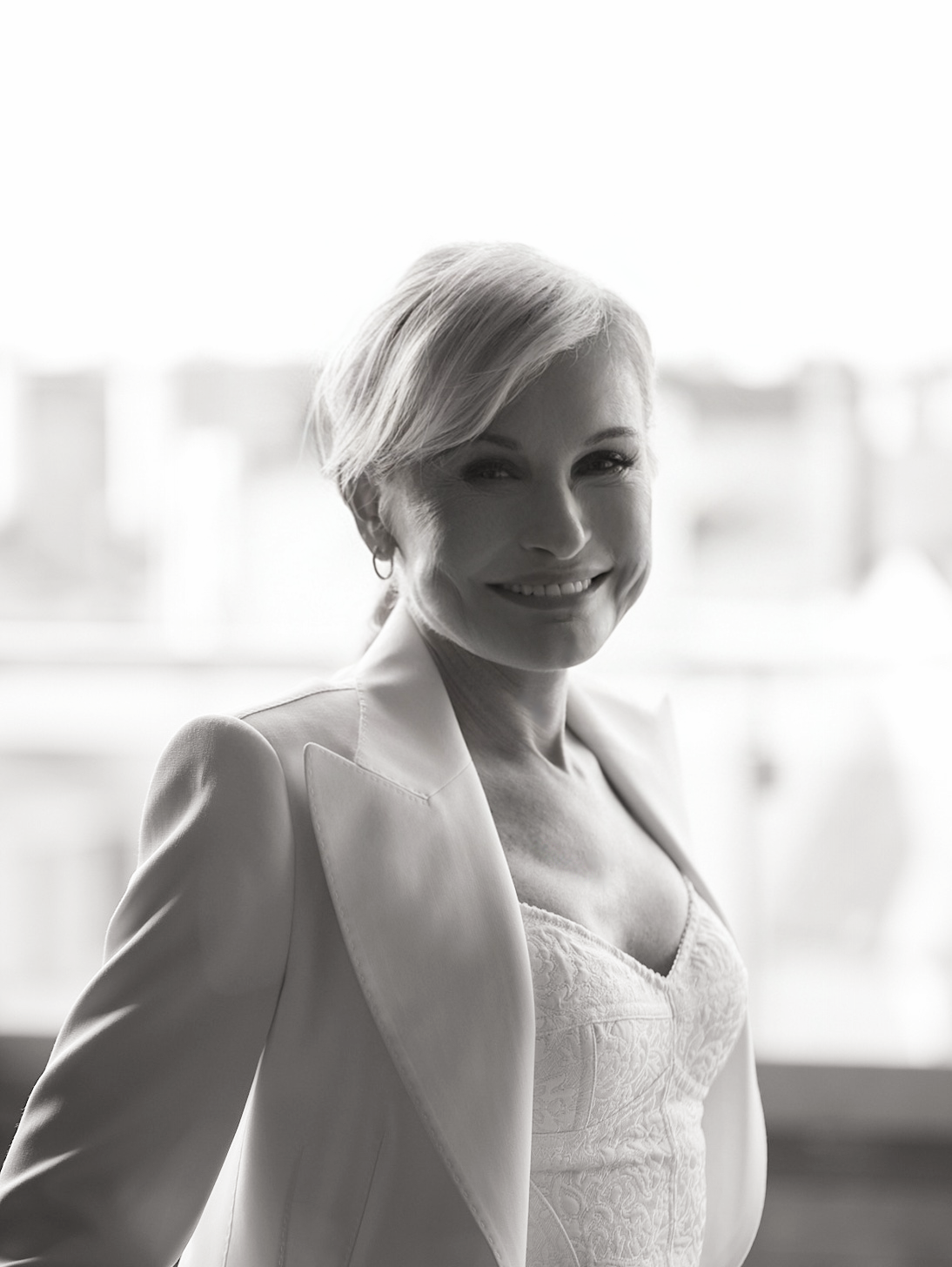
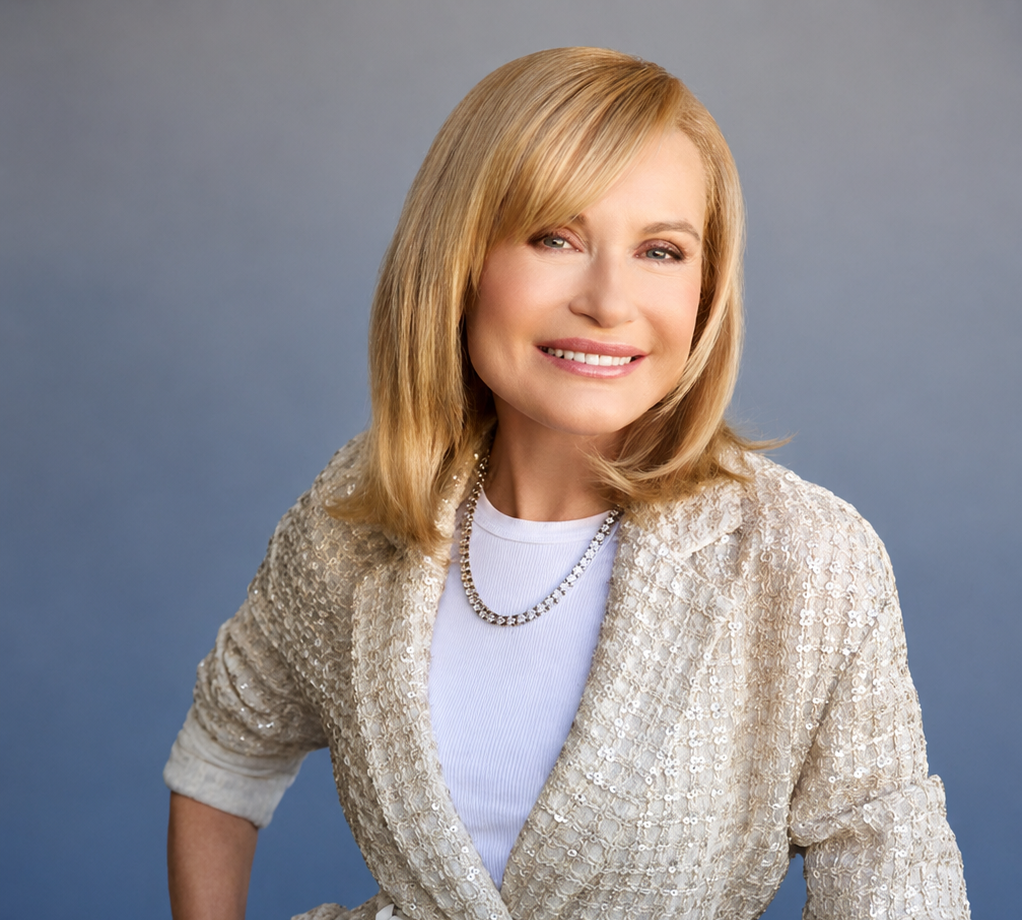
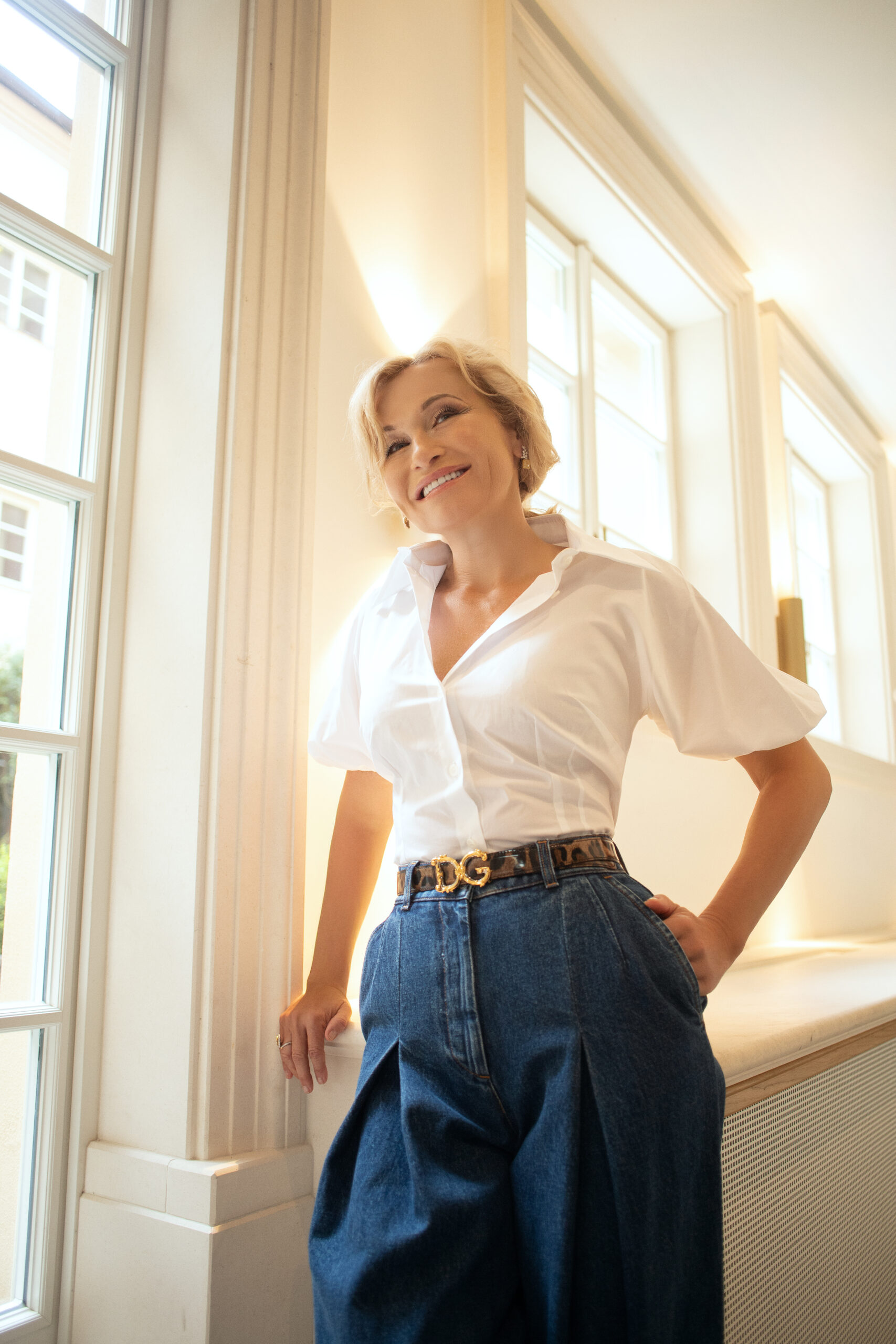
Luxury has never been about ostentation for her. Investor, hotelier and owner of luxury fashion boutiques Lenka Vejvalková builds her business on craftsmanship, personal relationships and brands that stand the test of time.
You regularly appear on lists of the most influential women in Czech business. Do you ever feel that kind of recognition carries a certain responsibility?
Honestly, I have never thought about it that way. I do not see it as a responsibility, or as something that should shape how I present myself or what I ought to say.
When did you first realise that you did not want to be merely the operator of a successful business, but a genuine owner and investor – which brings not only freedom, but also risk?
After working at the former Czechoslovak Academy of Sciences, specifically at the Economic Institute, I set off on my own path and began building something for myself. So I have never known any other way of operating. Entrepreneurship was not a decisive turning point for me – it was a natural progression. Did this world ever catch me off guard? Probably not. Perhaps precisely because I have been in it for so long, I take it as entirely natural territory.
Looking back at your business over the years – whether in hospitality, tourism or luxury retail – what do you think has changed the most?
In the end, everything is connected. Hospitality, retail, travel, lifestyle – it all interrelates far more than people realise. The last few years have been very turbulent and have transformed practically everything: the way people travel, the composition of clientele and what customers expect. In the luxury segment, I see a very clear polarisation of the market today. For me, there are essentially only two worlds left – genuine luxury and the mainstream. The gap between them has widened considerably.
You mentioned that a fundamental shift came in recent years. Was the pandemic the turning point – when not only retail, but also the hotel business and tourism in Prague began to change?
I think so. Covid was one of the principal turning points. Then came the war in Ukraine and the broader geopolitical situation, which further altered the composition of the clientele. For Prague hotels, for example, Russian guests had been extremely important for many years. They loved Prague, often stayed for five or six days, and played a significant role in filling what we call midweeks – the days in the middle of the week. By contrast, most other tourists tend to visit for shorter stays. And this year we are seeing another shift: due to the situation in the Middle East and restrictions on air travel, a significant portion of high-net-worth clients from Asia and the Arab world are travelling considerably less.
Do you sense that Czech customers’ relationship with luxury brands has been changing in recent years? Are they more open to quality and more willing to pay for it?
I think so, but it is a long-term process that did not happen overnight. Czech customers are, in my view, far more experienced today – they travel more, they see how the world works, and their relationship with quality and what they are willing to spend on has changed naturally as a result. I sense that people think about their lifestyle in a much more holistic way than before. I personally believe life should have a certain equilibrium. There is how you live, how you travel, how you spend your time and how you dress. All of it should be in harmony with who you are.
You are associated with the philosophy of so-called quiet luxury – luxury that is not defined by a logo or ostentation, but by material, craftsmanship and detail. How do you recognise genuine quality?
I think you have to experience it to truly understand it. A photograph or a product online is not enough. You have to feel real quality. You have to take that material in your hands, put it on, sense how it fits, how it is finished, how it makes you feel. And at the same time, you need to know something about it. You need to understand how much work and craftsmanship goes into a product like that. Once you do, it stops being about the price. It becomes about quality, comfort and long-term value.
When it comes to the quiet luxury segment, what resonates most with you personally?
If I were to name one brand that perfectly embodies this philosophy, it would undoubtedly be Brunello Cucinelli. For me, it is an absolutely exceptional example of what genuine luxury should look like. A large part of the production still takes place in family-run workshops. Many pieces are still knitted by hand, the finest materials are used, and every detail reflects an immense respect for craftsmanship. That is precisely why we have clients who return to these brands year after year.
If you were to define luxury purely from a personal perspective, what does it truly mean to you?
For me today, luxury is above all freedom. The freedom to do work that genuinely excites me. The ability to decide how I spend my time, to travel and to meet inspiring people.
You run companies, represent global brands and lead very diverse teams. What kind of leader are you?
I am certainly not the type of leader who needs to be approachable at all costs. I would probably describe myself as demanding – towards myself and towards the people around me. I expect a high level of commitment, discipline and perhaps sometimes more than is considered standard. I need people around me who do not simply come in every morning because they have to. I want to work with people who find meaning in what they do and who are loyal. For me, that is an absolute foundation. In my business, for example, there is no such thing as working from home – and I am glad of that.
Your portfolio includes brands such as Dolce & Gabbana, Moorer and Brunello Cucinelli. How do you identify that a brand has the potential to endure over the long term?
I have a strong affinity for family-owned brands. That is a very important criterion for me personally. I am drawn to companies with specific people behind them, a genuine story and clear values. I enjoy meeting those people and talking with them. I see many of the owners regularly, and for me that is an integral part of a long-term partnership.
When you think about growing your businesses, what is decisive for you – location, service or the brand portfolio itself?
Ultimately it is a combination of everything, but if I had to name what is truly essential for me, it comes down to very clear parameters. A brand must have a stable ownership structure – ideally family-led, so that there are no constant shifts in strategy or direction. It must be grounded in quality, in craftsmanship, in a high proportion of handwork. And it must have long-term value.
Most of your boutiques are on Pařížská Street in Prague, which is undergoing transformation and the whole surrounding area is set for further development. Could that change the character of Pařížská itself?
I genuinely hope so. I think the end of Pařížská deserves a new impulse and more life. What is missing there are places where people can linger – quality restaurants, a bar, somewhere to sit down, have a drink or a coffee, and actually spend time. Luxury retail today is no longer just about shopping. It is about the entire experience, about the atmosphere of a place. If this part of the Old Town can be revitalised, it could be a positive development not only for hotels and gastronomy, but for the entire retail landscape of the area.
How much does luxury fashion follow trends? In the mainstream, new collections appear practically every few months. Does the same apply in genuine luxury?
I think the very best luxury brands operate somewhat differently. With many of these brands, you are not buying something for a single season. You are buying a product that is meant to last for years – in terms of quality, design and value. And that, I believe, is where genuine luxury truly lies. It is an investment in something that stands the test of time.
Sustainability is also a major topic in the fashion industry today. How important is that for the brands you work with?
It is certainly an important topic, though perhaps in a slightly different way. Luxury brands tend to think about sustainability in a much broader context – where materials come from, how they are sourced, how production is conducted, who is behind it and what conditions people work in. The best owners and families we partner with follow the entire process in genuine detail.
Luxury fashion, though, is not only about the product itself – it is about the experience. How important is the atmosphere of a boutique and personal service to a client today?
Absolutely fundamental, in my view. Luxury cannot be replicated by an online purchase or a single click on an e-shop. A client wants to see the product, touch it, try it on, feel the material. And the atmosphere, the space and the service are equally important. You are not just buying a product – you are buying an experience.
Travel is closely intertwined with both your lifestyle and your business. Where do you most love to return when you genuinely want to rest?
There are several places I keep coming back to. I am very fond of the islands of Abu Dhabi. I also love South Africa, which I consider one of the most beautiful countries in the world. And then there is Sardinia, where I return quite regularly.
Is there somewhere still on your travel wish list?
Japan. It is a country I would very much like to discover, but so far I have not managed to align it with my working pace.
Are you able to fully switch off on your travels?
I have not quite managed that yet. There is always something, somewhere, that requires attention. So switching off completely – I am probably not capable of that. Even when I am on holiday, I am on my phone, communicating and keeping track of what is happening.
When preparing for our conversation, I noticed that there are not many public interviews with you. Is protecting your privacy important to you?
Privacy matters to me, and perhaps that is also why I am not active on social media in the way that has become common today. I follow it professionally, of course, but I have no need to share where I am, where I am flying or what I am drinking at any given moment. I will admit I do not entirely understand it, either.
Returning to the subject of women in business – what would you most like a woman standing at the beginning of her own entrepreneurial journey to take away from this conversation?
Above all, that she should never doubt that she belongs in business. I have never thought of women as having a lesser chance in entrepreneurship, or of it being a world that belongs primarily to men.
Luxury as a Way of Life
Perhaps Lenka Vejvalková is the perfect example of why true luxury never needs to be loud. You recognise it in a fabric you instinctively want to touch, in an impeccably tailored jacket that will transcend seasons, in a hotel you long to return to, or in a level of personal service that no single click can ever replace. It is a world built on detail, craftsmanship and emotion – qualities that, in an age of infinite accessibility, may have become rarer than the objects themselves. Her perspective on luxury has been shaped by years spent at its very heart, across hospitality, travel and fashion houses for which quality remains inseparable from time and the human hand.
She brings the same discerning eye with which she selects brands for her portfolio into her own world. She is drawn to stories with continuity, family-run businesses, genuine craftsmanship and people whose names stand for clearly defined values. Perhaps that is why her own definition of luxury ultimately has very little to do with fashion. For her, luxury is freedom. The freedom to decide how to spend her time, to do work she genuinely enjoys, to travel and to meet inspiring people.
We would like to thank Lenka Vejvalková for an open conversation and for offering us a glimpse into a world where luxury is not defined by a logo, but by quality, personal taste and, above all, freedom.
Jitka Klementová
Editor-in-Chief, Lock in SUITE