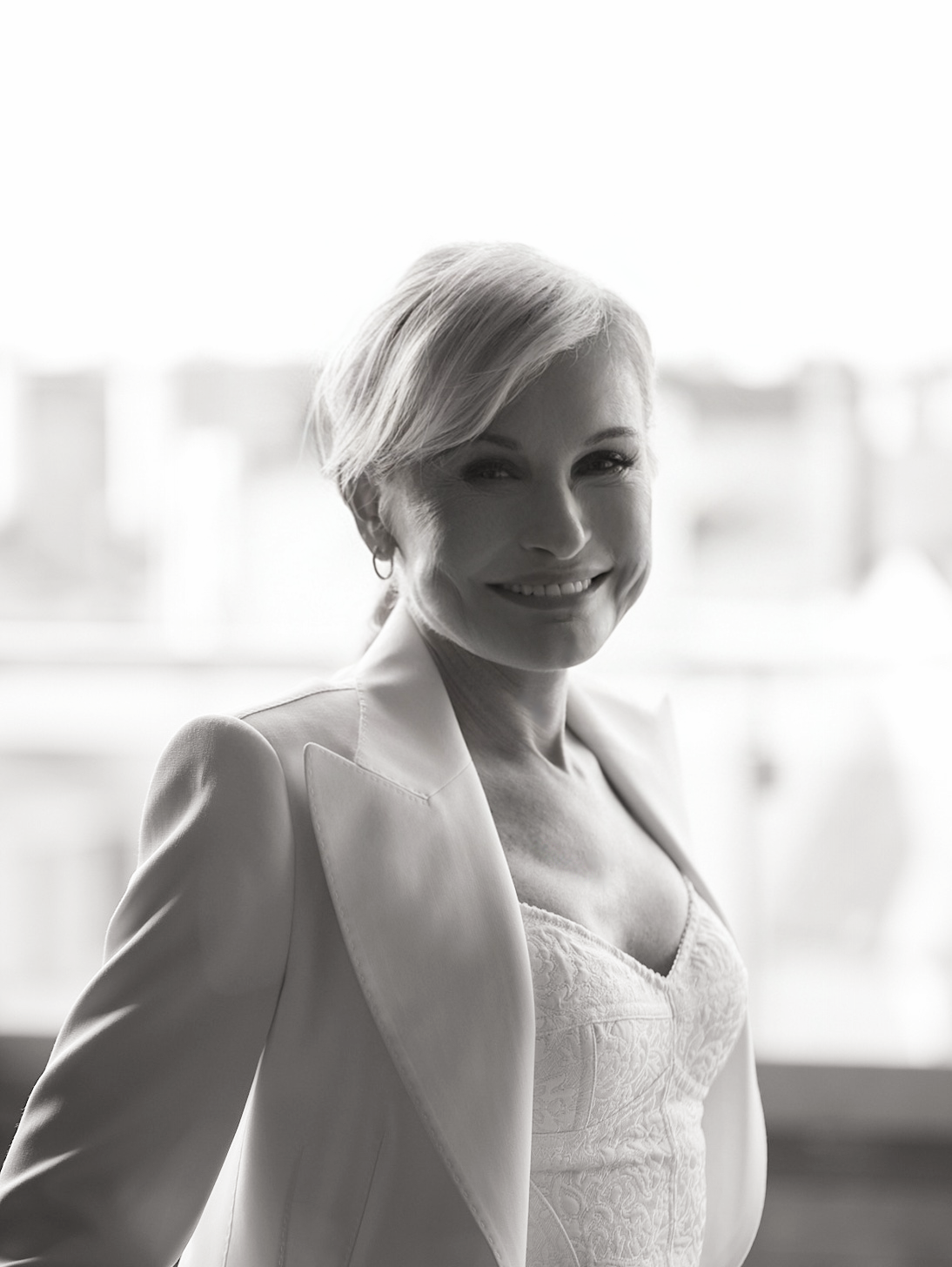
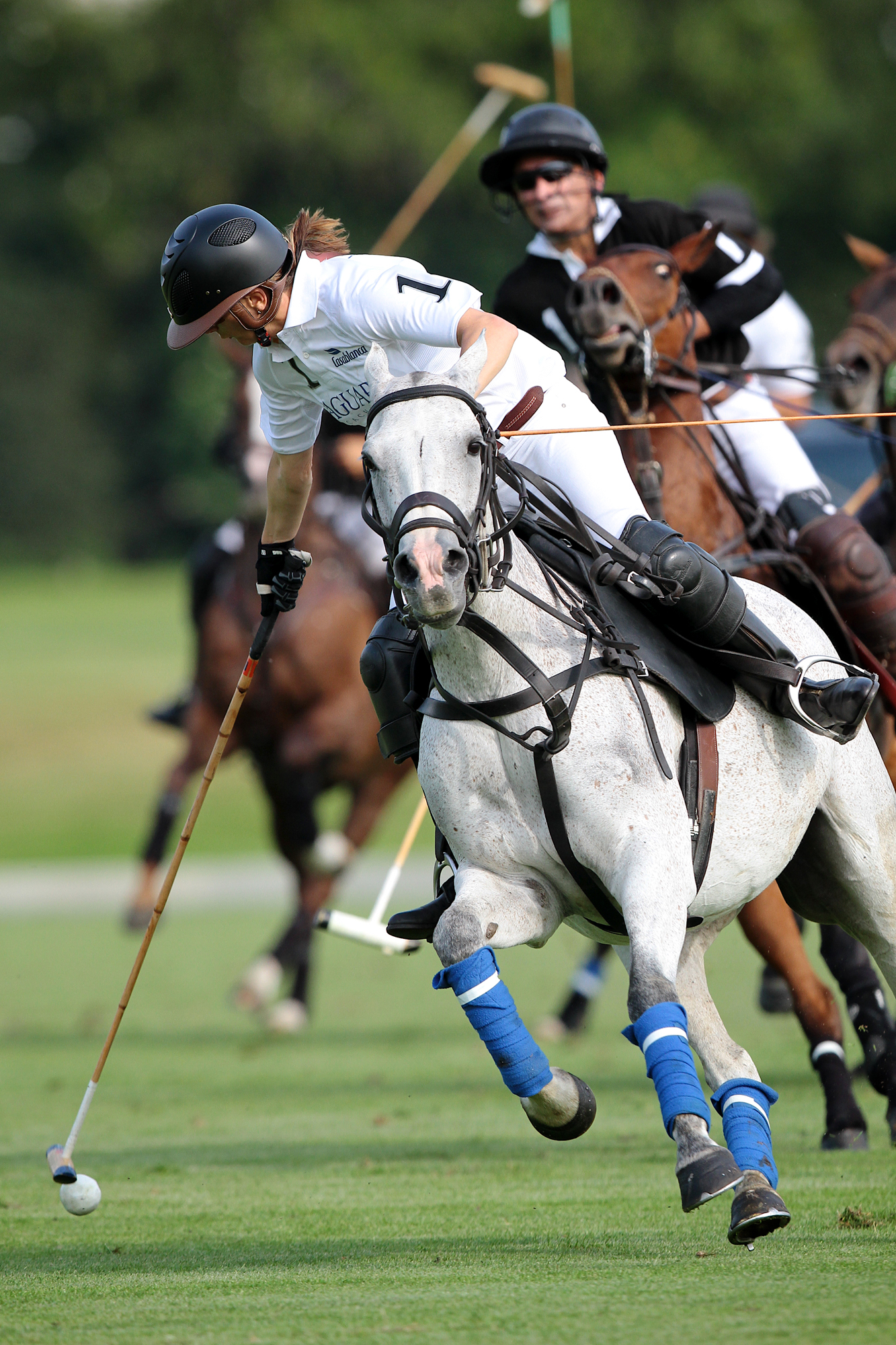
The worlds of top-level polo, British aristocracy and luxury brands have one thing in common: authenticity. Martina Lowe, founder of M Consulting – a successful PR agency and newly appointed President of Richmond Park Polo Club, talks about respect that cannot be bought, the world of British polo, leadership and the expectations women in senior management still face.
Martina Lowe has spent decades working in the worlds of luxury and communications. For eighteen years, her professional career was closely connected with Louis Vuitton. She went on to establish her own agency and brought international polo to the Czech Republic through La Republica Polo Club. Today, she is entering another significant chapter of her life as President of Richmond Park Polo Club in London.
But her story is about much more than polo. It is also about respect built over time, authenticity, strategic thinking and the ability to succeed in environments traditionally dominated by men.
You have become the first woman to lead Richmond Park Polo Club. How difficult was it to earn respect in this environment?
It has been a long journey and, at the same time, a major milestone, because I am the first woman in the history of England to lead a polo club. The British brought polo from India to Europe and continue to set standards in the sport today, so tradition and history carry enormous weight here. I believe I am only the third woman in the world to have reached a similar position.
I have been playing polo in Britain for fifteen years and gradually had to earn respect at many different levels. Horses have also played an important role. I have always invested very seriously in the sport, whether in high-quality horses, my own breeding programme or supporting young players. Respect did not come overnight. It is the result of many years of work, investment and consistency, as well as the fact that I have never approached polo merely as a social activity, but as a serious sport.
What is it like to lead a club with such a strong British heritage?
The central institution of British polo is the Hurlingham Polo Association, which governs and oversees the sport as a whole. Richmond Park Polo Club represents, in a way, a return to the roots of polo in England.
Richmond Park is also part of the Royal Parks, whose patron is King Charles III. The location itself is a major advantage. It is the largest urban park in Europe and, at the same time, part of London. This brings polo much closer to the public. People who regularly visit the park can come and watch a sport that has long been perceived as a very closed world. I believe this accessibility is important for the future of British polo.
OPENING POLO TO A NEW GENERATION
Is one of your main goals to open polo to a wider community?
The academy is a major part of the concept. We want to give people who live in London the opportunity to play without having to travel outside the city to traditional polo centres. At the same time, we want to reach people who do not want to, or cannot, own their own horses and maintain all the infrastructure traditionally associated with the sport.
Polo is a very expensive sport and the barrier to entry is significant. You need horses, a team to look after them, membership and logistics. We are trying to create a model that makes the sport more accessible.
So you also want to bring an entirely new generation of players into polo?
Yes, and we can already see that it is working. The University of London, for example, approached us about moving its university team to our club. Anyone who knows how to ride a horse can become a member. We have groups for beginners as well as advanced players. And from a business perspective? Our goal for the first year is to build a sustainable club that does not require subsidies.
LUXURY IS MORE THAN A PRODUCT OR A LOGO
You were associated with Louis Vuitton for eighteen years. Can the principles of global luxury marketing also be applied to the world of polo?
All these worlds have naturally come together throughout my professional life. I have had a long international career in advertising and PR, I founded my own agency and, years ago, I also brought polo to the Czech Republic when I established La Republica Polo Club.
For five consecutive years, I organised the only international polo tournament in the Czech Republic. I had to secure sponsors, manage the communication of the entire project, bring the sport into the media and arrange television coverage. That experience demonstrated just how effectively my background in luxury brands could also be applied to sport.
So do the principles of luxury communication remain the same regardless of the industry?
Whether you are communicating Louis Vuitton, Bvlgari or polo, the fundamental principles are similar. Luxury is not just a product or a logo. It is an experience, an emotion, an environment, attention to detail and the way a brand connects with a particular community.
LUXUS NENÍ JEN PRODUKT NEBO LOGO
Osmnáct let jste byla spojená se značkou Louis Vuitton. Dají se principy globálního luxury marketingu přenést i do světa póla?
Všechny ty světy se v mém profesním životě přirozeně propojují. Mám za sebou dlouhou mezinárodní kariéru v reklamě a PR, založila jsem vlastní agenturu a zároveň jsem před lety přivedla pólo do České republiky, když jsem založila La Republica Polo Club.
Pět let po sobě jsem organizovala jediný mezinárodní pólo turnaj v Česku. Musela jsem získat sponzory, odkomunikovat celý projekt, dostat sport do médií i zajistit televizní vysílání. A právě tam se ukázalo, jak moc se moje zkušenosti ze světa luxusních značek dají využít i ve sportu.
Takže principy komunikace luxusu zůstávají stejné bez ohledu na obor?
Ať komunikujete Louis Vuitton, Bvlgari nebo pólo, základní principy jsou podobné. Luxus není jen produkt nebo logo. Je to zkušenost, emoce, prostředí, kvalita detailu a způsob, jakým se značka dokáže propojit s určitou komunitou lidí.
AUTHENTICITY OVER OSTENTATION
You move in circles close to the British aristocracy and the international elite. How does one remain authentic in such an environment?
Authenticity is absolutely essential in Britain, particularly in circles associated with the aristocracy or the Royal Family. Ostentation and the nouveau riche attitude are strongly rejected. Showing off, excessively displaying wealth or trying too hard to impress simply does not belong there.
In fact, it is fascinating how much people value understatement. If, for example, you arrive at a hunt in a royal park wearing a completely new outfit covered in visible luxury-brand logos, it is actually considered a faux pas. People often wear things they have owned for years, watches inherited through the family – nothing ostentatious.
So respect cannot be earned through status or money?
You earn respect much more through who you are as a person. Whether you can hold an interesting conversation, whether you understand the world, culture, sport or politics. It is important not to come across as aggressive or excessively ambitious. British society is very diplomatic in this respect, and people will form their own opinion about whether you have substance and class.
PR HAS LONG SINCE BECOME MORE THAN A PRESS RELEASE
How has public relations changed since you founded your own agency?
When I started, PR was much more traditional. It was primarily based on press releases, press conferences and conventional media relations. Today, the industry is much broader and more complex. Events, strategic partnerships, brand collaborations and, of course, social media and influencers have gradually become part of it. Social media in particular has fundamentally transformed the communications ecosystem.
Is that why you no longer see your agency purely as a PR agency?
I have not seen myself simply as a PR professional for a long time. Thanks to my experience in advertising, media, CRM and public relations, I see our agency more as a communications and strategic consultancy. We are able to develop a complete communications strategy for our clients, regardless of the size of their budget.
YOU CANNOT EXCEL AT EVERYTHING AT ONCE
What advice would you give to women who want to succeed in industries that are still dominated by men?
My answer may not be the most popular one, but I think it is important to be very honest with yourself. Women who want to succeed in environments still dominated by men have to work harder, be more resilient and more disciplined. That is the reality.
At the same time, society still places enormous pressure on us to be great partners and mothers, take care of our homes, look good, find time for ourselves and ideally manage a senior executive career as well. And I genuinely do not think it is possible to do everything perfectly.
So is learning how to set priorities essential?
A woman has to acknowledge what is truly important to her at a particular stage of her life. She cannot feel that she has to excel at everything simultaneously. If you want to work in senior management or build your own company, you have to recognise that it will come at a cost – time, energy and certain compromises. That is not failure; it is reality.
In general, I think the biggest mistake is trying to be perfect at absolutely everything. It is far more important to set the right priorities and not be unnecessarily hard on yourself.
A “BOSS” IS NOT A LEADER
You have said that you do not like the word “boss”. What kind of leadership do you believe in?
I really do not like the word “boss”, either in business or in polo. Both are team games, and a team can only function when everyone understands their role and everyone is pulling in the same direction. I have never believed that success depends on one person alone.
How does this approach translate into your everyday work?
I am not the type of manager who believes that pressure or fear brings out the best performance in people. For creative work, I personally need calm, respect and a clear mind. I try to create the same environment for my team.
You do not earn respect by being the loudest person in the room or by always having the final word. People respect you when they know you have experience, that you can move things forward and that your decisions make sense. At the same time, I believe a good leader must be able to accept a different point of view.
Respect, authenticity and the ability to stand behind her own decisions are ultimately what connect the seemingly different worlds of Martina Lowe – from luxury brands and strategic communications to British polo. Because genuine respect is not created by a title, a logo or social status. It is built over time through what you do and, equally importantly, how you do it.