Cart
Close
No products in the cart.

SIMON JOHNSON: A NEW ERA FOR CRESTYL

Economic uncertainty, pressure on quality, lengthy permitting processes and the ambition to reshape cities. Simon Johnson, the new Group CEO of Crestyl, discusses what it takes to lead a development business in Central Europe today – and why true value is created not only through numbers, but through architecture, trust and long-term vision.

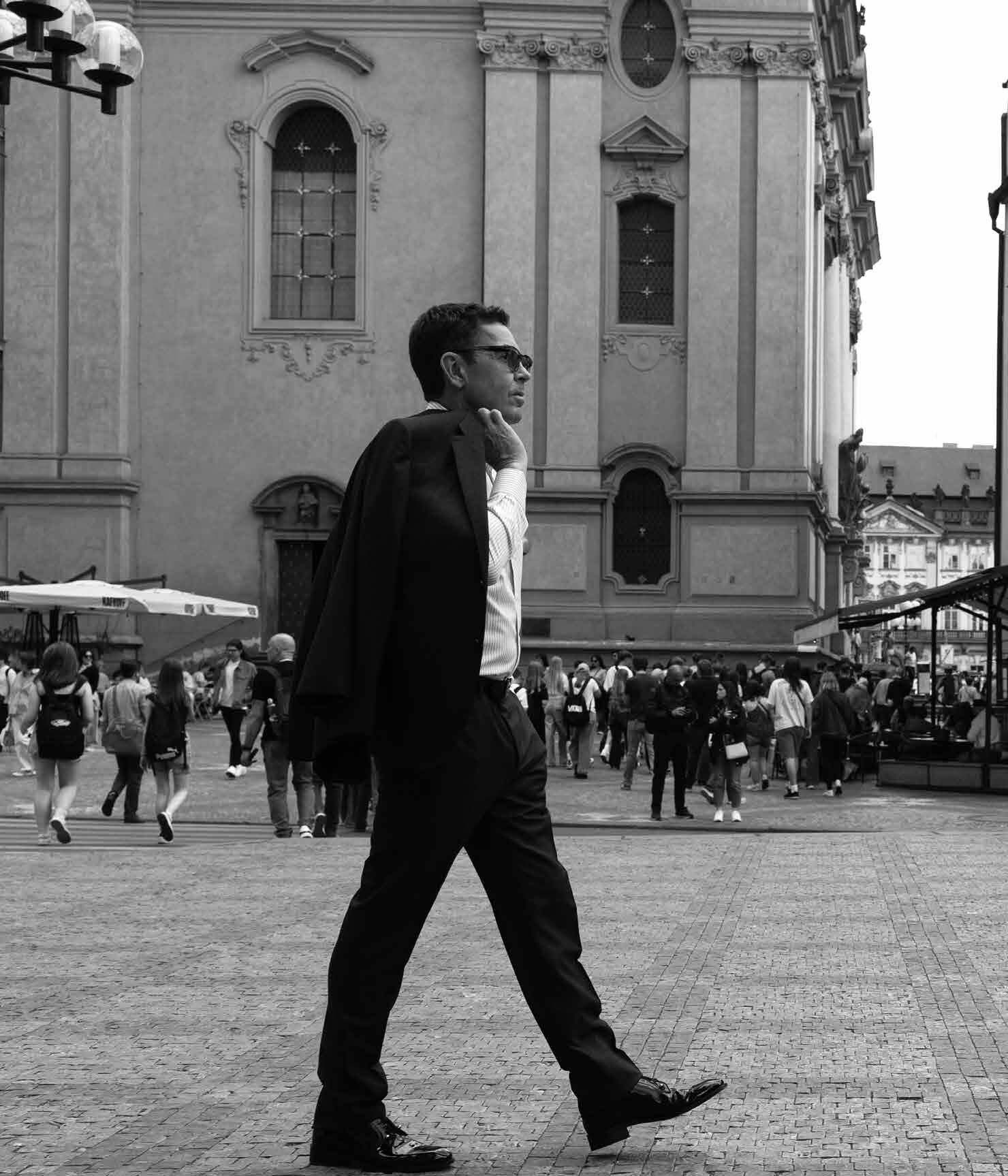
SIMON JOHNSON, CEO of Crestyl

You are Crestyl’s first CEO from outside the founders’ family in almost thirty years. When did you and Omar Koleilat realise that the time had come for you to take over the leadership of the Group, and what ultimately led to that decision?

I can’t say there was one particular moment. Over the past fifteen years, I gradually took on an increasing share of the company’s operational management. A significant shift came in 2021, when I became CEO of the Czech business while continuing in my role as COO across our activities in Poland. The process culminated in 2025 with my official appointment as Group Chief Executive Officer, shortly after we acquired 100% ownership of our Polish company, Spravia.


You moved from the role of COO to leading the entire Group. What did that change mean to you personally? In what way did you have to change your leadership style the most?

My team often talks about the “new Simon” and the “old Simon”. Historically, I was Omar’s man on the front line – someone who protected the company and often managed the team in a very direct, sometimes even tough, way. But that has changed. As a Group, we have gone through what I would call a cultural renovation. During that process, I adopted a much more personal style of leadership, where supporting individual team members and their development became a priority.

On a personal level, it was of course a fundamental change. Omar Koleilat is five years younger than I am, and I had always assumed that I would remain number two until the end of my career. Taking on the leading role fundamentally changed the way I see myself and my position within the company. And, frankly, I feel very comfortable in this role.


What is the greatest challenge developers face today? Financing, the permitting process, or maintaining project economics as costs continue to rise?

Today, I would say the greatest challenge is macroeconomic and political uncertainty. We are entering a new economic cycle that, historically, could signal a period of stability and growth. However, factors such as Trump, Ukraine or Iran can very easily destabilise the systems and financial infrastructure on which we depend. And this kind of uncertainty is particularly challenging for long-term investments such as real estate.


Looking at 2026, is there a risk that the public rarely sees but which can ultimately determine whether a project succeeds?

I would certainly mention the ability to maintain a high standard of architecture at a time of intense inflationary pressure on costs. Staying true to your values in terms of design and quality when margins are under enormous pressure is not easy. Closely connected to this is the need to differentiate yourself in a market where, frankly, almost anyone today can build or sell a new project.


Sustainability and responsible corporate governance resonate across the entire real estate market today. Which requirements have the greatest impact on your decision-making, and where do you feel the strongest expectations – from banks, investors or the market itself?

Unfortunately, sustainability and ESG have lost some global momentum recently, although they are now returning to the centre of attention. For most institutions, it remains a binary question – you either comply or you do not. Personally, I see ESG as a competitive advantage and an area in which we can be a leader. I certainly do not regard it as simply another burden in the form of heavy EU regulation, as it is often portrayed in the Czech market today.

At Crestyl, we have never slowed down. We continue to pursue green certifications for our buildings. We are not the greenest developer in the Czech Republic – there are companies that go even further in this respect – but we have long placed great emphasis on the social dimension. That means thinking not only about our employees, but also about the wider community: the people who live in our projects as well as those who simply pass through them.

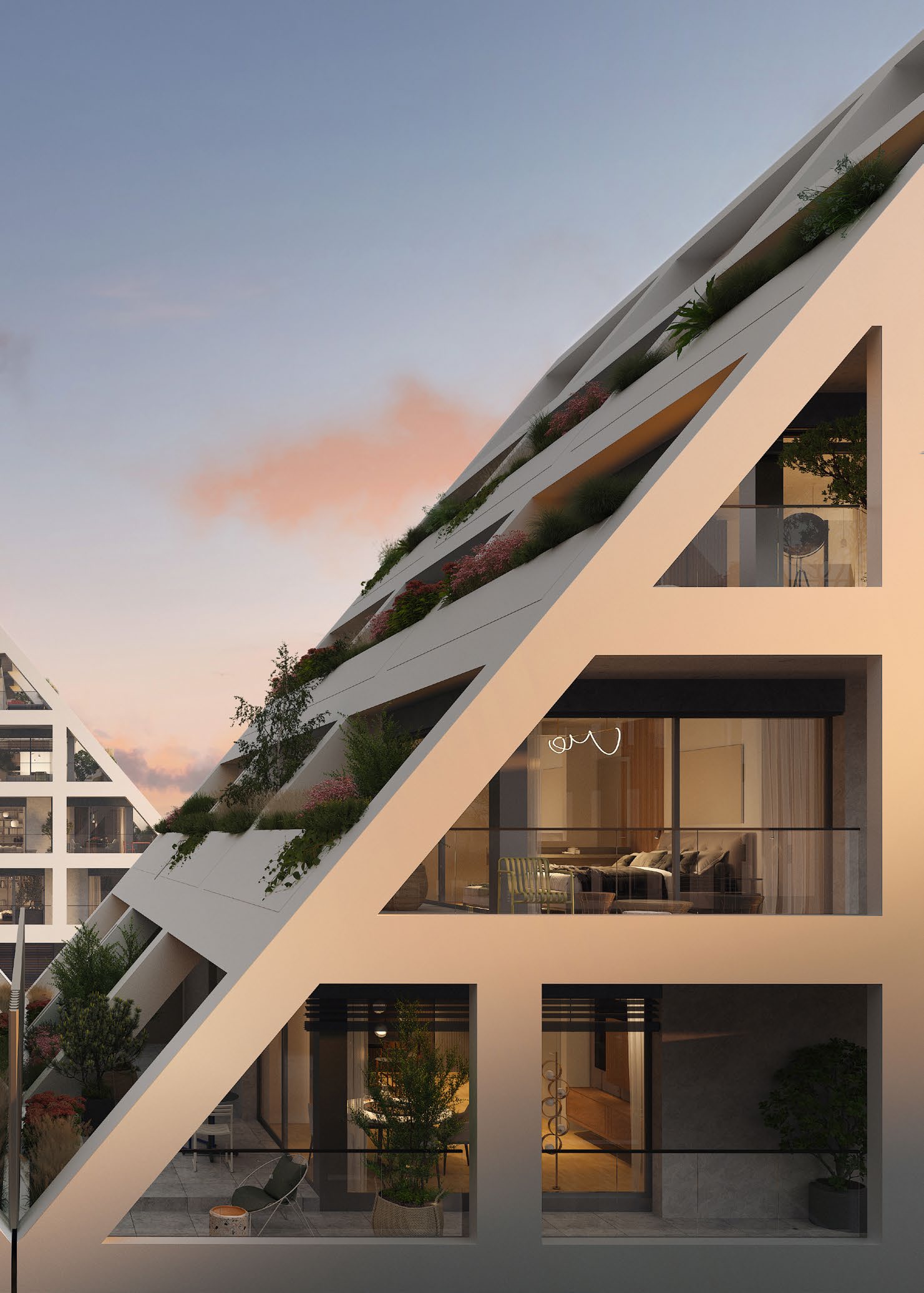
Project HAGIBOR, Prague

With major development projects, the permitting process can take years. How do you protect yourself from a cash-flow perspective in such situations, and how do you maintain the confidence of partners and investors?

Frankly? Essentially, you don’t. You simply have to manage it, and it hurts. We are placing some hope in the Metropolitan Plan and the new Building Act. We face similar issues in Poland, but the entire process there is much more reasonable and takes approximately one-third to one-half of the time. The risk of delays caused by procedural errors is therefore on a completely different level.


What would realistically have to change in Prague for development to move faster? And how much responsibility for the current situation lies with developers themselves?

The Metropolitan Plan needs to be approved. That is the first step and where all attention should be focused. There should be no more discussion – what is needed now is decisive action and approval.

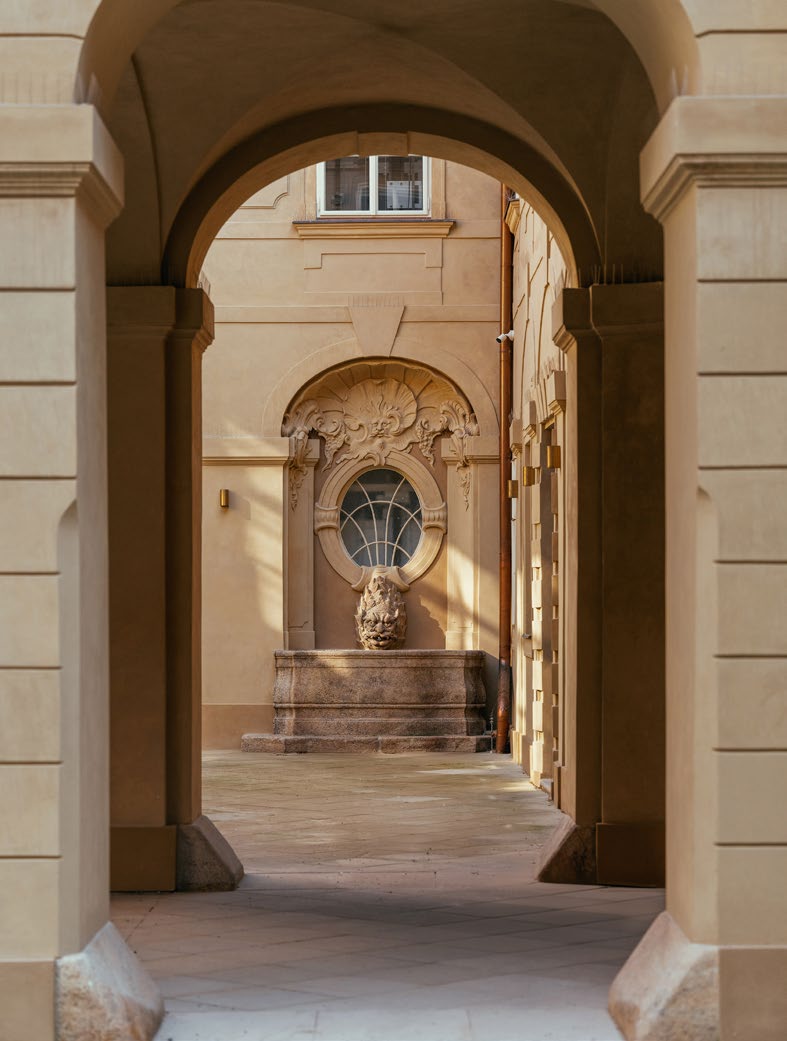
Palace SAVARIN, Prague

Since 2023, the Polish company Spravia has been part of your Group. What surprised you most about the Polish market – the speed of decision-making, legislation or customer attitudes?

The Polish market is more efficient and the volumes are larger, which creates better systems, more standardised documentation and more functional legislation. The word “developer” does not carry a negative connotation in Poland. The need for new housing is a genuine political issue there, and both the public and local authorities respond accordingly. Developers are seen as a real part of the solution. At the same time, the differences between our two companies are precisely what make us a more diversified platform.


Do you therefore see Poland primarily as the Group’s growth engine, or as a strategic hedge against the Czech market?

The Polish market is significantly larger and will represent an important part of Crestyl’s business. But that does not diminish the strength of our projects and development portfolio in the Czech Republic, whether it is Šárka, Hagibor and Savarin in Prague or Dornych in Brno. The two markets offer different products, but they can also learn a great deal from each other.


You collaborate with major names such as Thomas Heatherwick Studio and Michel Desvigne. How do you know when such a partnership makes sense not only from a reputational perspective, but economically as well?

I love collaborations like these. Our brand promise is built on high-quality architecture, and both of these teams are exceptional in this field. There is a clearly recognisable design signature behind every detail and every element. Nothing is left to chance. It is an inspiring process to be part of, and I am proud that we have brought it to the Czech Republic. We also frequently collaborate with other strong “love brands”, and I would have no hesitation in including Crestyl among them.


Crestyl often speaks about projects giving something back to the city. How does this philosophy translate into specific investment decisions? Are you prepared to invest more even when it may not be the most advantageous option in the short term?

The simple answer is yes, we are prepared to invest more. We would never choose a location that did not allow for this additional emphasis on design. It is precisely this level of quality that allows a project to be truly “Crestyl”. And our clients appreciate this approach. They buy apartments in our developments because they age well and their value and price increase significantly over time, thanks to our attention to detail and the so-called wow factor that we bring to every project, whether residential or commercial.

You were born in Britain, but you hold Czech citizenship and have worked in Central Europe for many years. What elements of British working culture and leadership have you brought to Crestyl, and what works better here than in the UK?

I have been here for almost thirty years, so making a direct comparison is no longer entirely easy. But I think I bring a strong work ethic to the company. When something needs to be done, I do it, even at the expense of the often-discussed work-life balance. I started working on construction sites when I was seventeen – next year it will be forty years – and during that time I have never taken a single day off or had a genuine break from work apart from holidays.

That does not mean I expect the same from our employees. I believe people perform well in different environments and everyone needs something different. But when the decisive moment comes, I expect the very best from them – and very often, that is exactly what I get.


Looking at Crestyl over the next three to five years, how would you like investors, partners and cities themselves to perceive the brand? What should be the first association when someone says Crestyl?

Design. Fairness. Transparency. Belonging. These are our clearly defined values, and I believe they should be evident both in our projects and in our relationships at every level. We want to be a company associated with projects that transform cities – such as Dornych or Savarin, which have become iconic within their respective environments. At the same time, we want to build a residential business capable of delivering more than 4,000 units annually, with the ambition of entering the public markets.

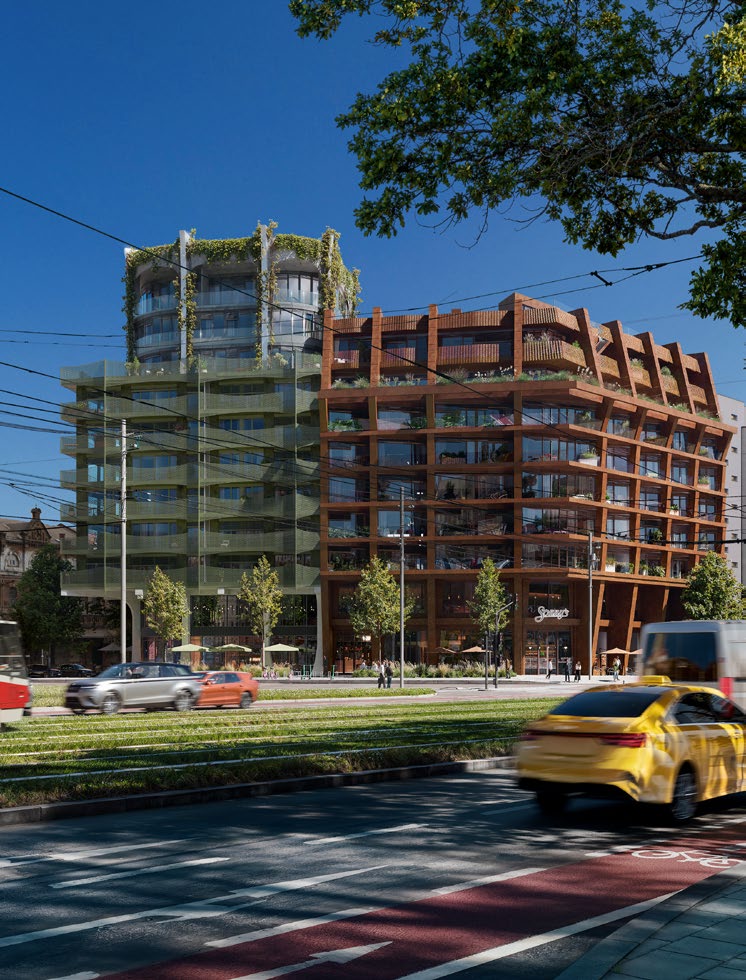
Project NOVÁ AMERICA, Brno

ARCHITECTURE THAT MUST STAND THE TEST OF TIME

Perhaps Simon Johnson’s final four words – design, fairness, transparency and belonging – best capture the way he thinks about Crestyl today. In his view, development is not simply a matter of square metres, investment models and returns. The moment a new project becomes part of a city, it remains there for decades. And with that comes a responsibility that cannot be measured solely in numbers.

Johnson’s perspective is remarkably pragmatic. He speaks openly about pressure on margins, complicated permitting processes and the uncertainty that now accompanies long-term investment. Yet he refuses to accept that economic pressure should mean compromising on architecture or quality. A project can be commercially successful today. Truly good architecture, however, must continue to work when the market, lifestyles and even the generation using it have changed.

Savarin, Hagibor and Dornych are therefore more than entries in a development portfolio. They reflect an ambition to create places capable of transforming part of a city while retaining their value over time. The ability to combine economic discipline with design, long-term vision and respect for the surrounding environment may ultimately become one of the defining measures of Crestyl’s new era.

And perhaps just as interesting as the transformation of the company is the transformation of the man leading it. The executive once described by his own team as the “old Simon” has become a CEO who speaks about supporting people and undertaking a cultural renovation of the business. After almost thirty years in Central Europe and a career that began on a construction site at the age of seventeen, Simon Johnson enters his new role with something that cannot be accelerated or bought in development: experience tested by time.


We would like to thank Simon Johnson for an open and insightful conversation and for offering us a perspective on the world of development where economic reality meets architecture, responsibility and the ambition to create projects whose significance will endure long after their completion. We wish him and the entire Crestyl team continued success, many exceptional projects and the courage to keep transforming cities.

Jitka Klementová
Editor-in-Chief, Lock in SUITE


Follow Our Newsletter

Get access to inspiring stories from the world of Suite,
delivered directly to your inbox.

Related Articles

Previous
Next